
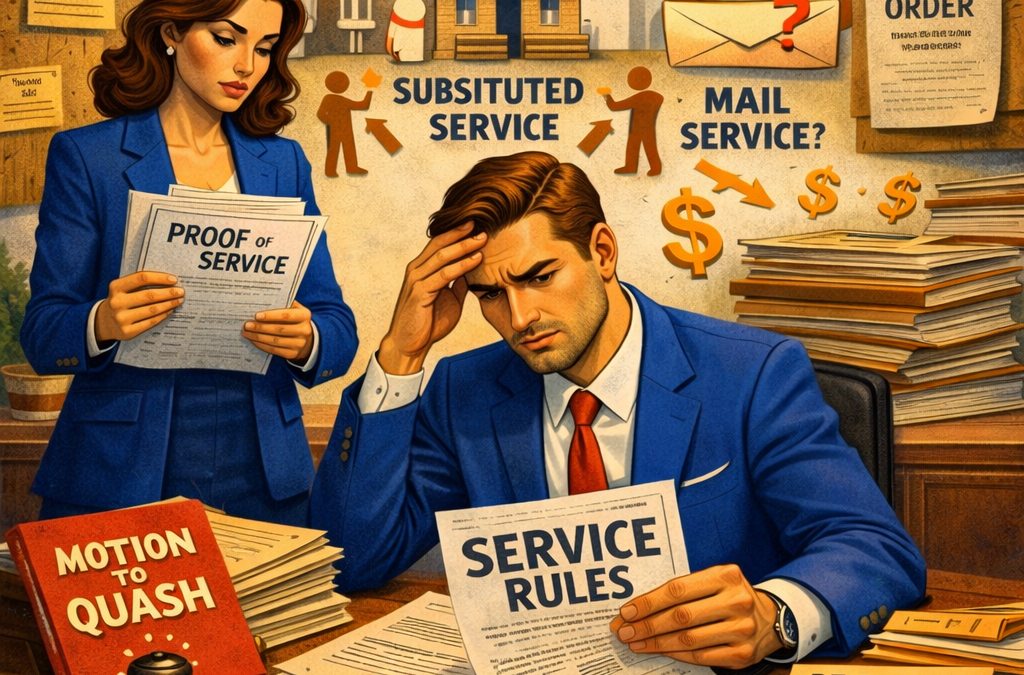
What Are the Rules for Serving Someone in California | Law Firm Guide
Service of process looks simple on paper. However, in practice, mistakes quietly derail cases every day.
Because California courts treat service as a jurisdictional requirement, even small errors can invalidate filings. Therefore, law firms must understand not only what the rules say, but how courts interpret and enforce them. Moreover, attorneys who rely on inexperienced or rushed servers often discover problems only after deadlines pass.
As a result, professional process service isn’t a convenience — it’s risk management.
Personal Service in California: The Gold Standard
Personal service remains the preferred method because it creates the strongest legal footing. Therefore, when a defendant can be located, professional servers prioritize direct hand-off.
However, timing and execution matter. For example, California generally permits service between 5:00 a.m. and 10:00 p.m., yet improper conduct during service can still invalidate the attempt. Additionally, accurate identification and documentation remain critical.
Because courts presume proper service when personal delivery occurs correctly, law firms benefit from servers who document each step meticulously.
Substituted Service: Allowed, But Only If Done Correctly
When personal service fails, substituted service becomes an option. However, courts scrutinize it closely.
Therefore, California requires:
-
Diligent attempts at personal service first
-
Delivery to a competent adult at the residence or workplace
-
Follow-up mailing to the same address
Although some assume “leaving papers at the door” works, that assumption often triggers re-service. Consequently, improper substituted service wastes time, money, and credibility.
Can You Serve Someone by Mail in California?
Yes — but only under specific conditions.
Service by mail typically requires the recipient’s acknowledgment of receipt. Therefore, if the acknowledgment isn’t returned, service fails entirely. Meanwhile, deadlines continue to run.
Because mail service feels deceptively easy, it often causes the most damage when used incorrectly. As a result, experienced servers advise attorneys when mail service makes sense — and when it doesn’t.
Who Can Accept Served Papers?
California allows service on another person in limited situations. However, courts reject service when:
-
The recipient lacks a connection to the defendant
-
The server fails to explain the documents
-
The follow-up mailing is missing or late
Therefore, law firms should never assume acceptance equals valid service.
Proof of Service: Where Most Cases Break
Even when service itself succeeds, proof errors still kill cases.
Common issues include:
-
Incorrect form selection
-
Missing declarations
-
Improper dates or addresses
-
Inconsistent attempt records
Because judges rely heavily on proofs, sloppiness invites motions to quash. Therefore, experienced process servers treat documentation as seriously as service itself.
Why Law Firms Choose Wet Ink Notary LLC
Because service errors cost far more than professional service, law firms across Southern California rely on Wet Ink Notary LLC.
Moreover, with 57+ recommended five-star Yelp reviews and 11 Google reviews, clients consistently describe our work as one of the best professional experiences they’ve had.
👉 Read verified reviews:
Wet Ink Notary LLC on Yelp!
Additionally, for attorneys who want direct court guidance, California Courts provides official service rules here:
https://selfhelp.courts.ca.gov/court-basics/service
Final Takeaway for Law Firms
Service of process sets the foundation of every case. Therefore, when service fails, everything built on top of it collapses.
Because precision matters, law firms partner with professionals who treat service as a legal function — not a delivery job.
Hire us today! We cover Los Angeles, Riverside, Orange, and San Bernardino Counties!