
What I Carry in My Notary Bag for Estate Planning House Calls: An Upland Mobile Notary’s Field Guide
When most people search for an estate planning notary Upland CA families trust, they are picturing a quick signature at a desk somewhere. They think the notary shows up, stamps something, and leaves. That is not how it works in the field, especially when the signing happens at a rehabilitation facility, a dimly lit bedroom, or a hospital bedside where the patient just had a stroke.
I am Brent with Wet Ink Notary, and I am based right here in Upland. This is my home turf. I have notarized estate planning documents at kitchen tables in the neighborhoods near Foothill Boulevard, at assisted living facilities off Campus Avenue, and inside patient rooms at Upland Rehabilitation Care Center. Every signing is different. However, the bag I carry is always the same, because after hundreds of mobile appointments, I have learned exactly what can go wrong and what I need to fix it on the spot.
This post is going to show you what a real estate planning signing looks like from my side of the table. If you are searching for an estate planning notary Upland CA residents actually recommend, this is what you are hiring.
Call (626) 248-0349 to book a same-day appointment.
How a Yelp Quote Turned Into a Rehab Facility Signing
A client reached out to me online requesting a quote for a mobile notary to help her mom sign a power of attorney as part of an estate planning package. She had actually written another notary’s name in the original request. That is normal on Yelp — when you request a quote, the platform sends it to multiple notaries at once, and the client picks whoever responds best.
I responded to her request quickly and professionally. She compared my reviews against the other notaries who quoted her, and she chose Wet Ink Notary based on the experiences of my previous clients. This is why reviews matter more than advertising. She did not pick me because I had the flashiest Yelp page. She picked me because other families in situations like hers said I showed up prepared and treated them with respect.
Her mom had recently suffered a stroke and was recovering at Upland Rehabilitation Care Center in Upland, California. The family needed a durable power of attorney notarized so that a trusted family member could manage her mom’s financial and legal affairs during recovery. This was not a routine office signing. This was a rehab facility, a patient in a hospital-style bed, and a family under stress.
I drove to the facility that same day.
The Flashlight in My Notary Bag
Here is something nobody tells you about rehab facilities and skilled nursing homes. The rooms are often dark. Depending on what time you arrive and which wing of the building you are in, the overhead lighting can be dim, the curtains are drawn, and the patient’s bed is tucked into a corner away from the window. Sometimes I visit clients who are bedridden at home, and their bedrooms are even darker.
This is why I carry a flashlight in my notary bag. It is not dramatic. It is practical. When you need to verify an ID photo, read the fine print on a notary certificate, or confirm a signature line in low light, a flashlight is the difference between a clean signing and a mistake. As an estate planning notary Upland CA families rely on, being prepared for these conditions is part of the job.
When I walked into the room at Upland Rehabilitation Care Center, the lighting was exactly what I expected. I pulled out my flashlight, positioned it so I could clearly see the documents and the signer’s identification, and set up the workspace on the bedside tray table. The patient’s daughter was in the room. We were ready.
What Is Actually in the Bag
After hundreds of estate planning signings across the Inland Empire, my notary bag has evolved based on real problems I have encountered in the field. Here is what I carry to every single appointment, and why.
My notary journal and seal are the legal essentials. California law requires every notarization to be recorded in a bound, sequential journal, and the notary seal must be affixed to every certificate. These never leave the bag.
A flashlight, because rehab facilities, hospitals, and home bedrooms are frequently darker than you expect. Good lighting protects the signer, protects the notary, and prevents errors on the certificate.
Alcohol wipes, because after I take a thumbprint in my notary journal, the signer’s thumb is covered in ink. In a hospital bed or a rehab facility, that ink transfers to sheets, gowns, IV lines, and call buttons. As a result, I wipe the ink off the signer’s thumb before I pack up. It is a small detail, but it shows respect for the patient and for the facility staff who are caring for them.
Extra acknowledgment and jurat certificates, because estate planning packages often include multiple documents, and each one may need a different certificate type. Running out mid-signing is not an option when your signer is a stroke patient who cannot schedule a second appointment easily.
Backup pens, because hospital tray tables are uneven, pens roll off beds, and some signers grip differently after a stroke. I carry multiple pens in different thicknesses so the signer can choose what feels most comfortable.
A current copy of California Government Code sections 8202 and 8230, because ID questions come up constantly. Knowing the acceptable identification rules by heart is essential, but having the statute in the bag settles any dispute on the spot.
This is what it means to be a prepared estate planning notary Upland CA families can count on. The bag is not a prop. It is the result of experience.
Assessing the Signer at a Rehab Facility
When I arrive at a rehab facility or skilled nursing home, my first priority is confirming that the signer is alert, oriented, and acting without duress. California law requires this for every notarization, but it is especially critical when the signer is recovering from a stroke, surgery, or a serious illness.
At Upland Rehabilitation Care Center, the patient was alert and aware. She understood which documents she was signing. She knew who she was naming as her agent in the power of attorney. Furthermore, she was able to communicate clearly, even though she was recovering from a stroke. Her daughter was present in the room, but she was not directing or pressuring her mother in any way.
If any of those conditions had not been met, I would have declined the notarization. As a California notary public, I have a legal and ethical obligation to refuse a signing if I have any doubt about the signer’s competency or willingness. This protection exists for the signer, not for the notary.
Once I confirmed that the patient was competent and willing, we moved forward with the signing.
The Estate Planning Documents Most Families Need
Most families who call me for an estate planning signing need more than one document notarized. A complete estate planning package typically includes several of the following.
A durable power of attorney authorizes a trusted person to manage financial affairs, pay bills, access bank accounts, and handle insurance matters if the principal becomes incapacitated. This was the primary document the family needed at Upland Rehabilitation Care Center.
An advance health care directive names a health care agent and records the patient’s treatment wishes. Without this document, medical decisions default to a statutory hierarchy that may not reflect what the patient actually wants.
A living trust holds assets and avoids probate. If the signer owns real property, a trust is usually the most important document in the package. Many families in Upland own homes that have appreciated significantly, and probate on a California home can cost tens of thousands of dollars in legal fees.
A pour-over will works alongside the trust to capture any assets that were not transferred into the trust during the signer’s lifetime.
A HIPAA authorization allows family members to access medical records and communicate directly with doctors and hospital staff.
Not every family needs every document. However, a prepared estate planning notary Upland CA residents trust will ask what is in the package before arriving so that the right certificates and enough journal entries are ready.
Call (626) 248-0349 to schedule your estate planning signing in Upland.
Why Stroke Patients and Rehab Residents Need Estate Planning Now
A stroke is a wake-up call for the entire family. Before the stroke, estate planning felt like something to handle next year. After the stroke, the family realizes that if the patient had lost the ability to communicate, nobody would have had legal authority to manage their affairs.
This is the window that matters. While the patient is recovering, while they are alert and competent, while family members are gathered from out of town — this is the moment to get the documents signed. Once a patient loses capacity, it is too late for a power of attorney. At that point, the only option is a conservatorship through the Probate Court, which costs thousands of dollars and takes months.
If your parent, grandparent, or spouse is in a rehab facility in Upland right now, do not wait. I travel to Upland Rehabilitation Care Center, to assisted living facilities, to skilled nursing homes, and to private residences throughout the city. Call me today and we can notarize the documents this week while your family member is still able to sign.
The Expired ID Rule That Saves Rehab Signings
Patients in rehab facilities frequently have expired identification. They have been hospitalized for weeks or months. They have not been able to visit the DMV. Their wallet may still have the same license they carried before the stroke.
Under California Government Code section 8230, a California driver’s license or state ID is acceptable for notarization even if it is expired, as long as it was issued within the last five years. This rule saves signings every month. Do not cancel an appointment because the ID is expired without checking the issue date first.
If the ID was issued more than five years ago, there are still options. Call me and I will walk you through the alternatives before I drive out.
What to Expect When Wet Ink Notary Arrives
If you have never hired a mobile notary for estate planning, here is exactly what happens when I arrive at your home, facility, or hospital room in Upland.
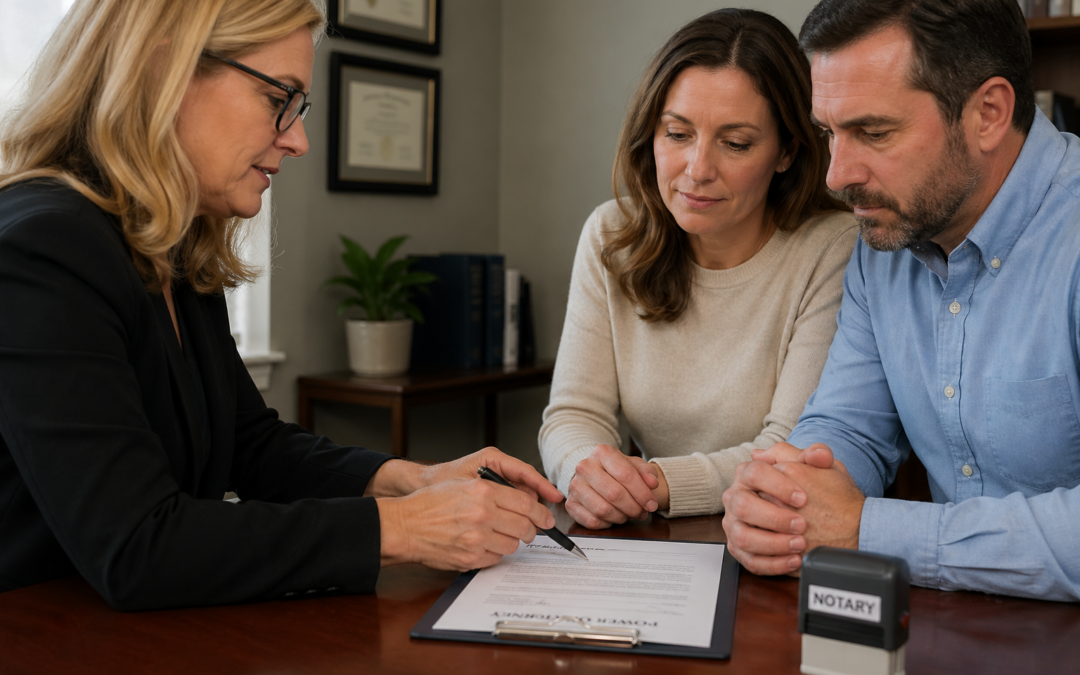
First, I confirm the signer’s identity using acceptable California identification. Then I have a brief conversation with the signer to verify they understand the documents and are signing voluntarily. After that, I review each document for proper notary certificate language and confirm that nothing has been pre-signed.
The signer signs each document in my presence. I complete the notary certificates, affix my seal, and record every detail in my bound journal, including the signer’s thumbprint. Finally, I wipe the ink off their thumb with an alcohol wipe, make sure the workspace is clean, and hand the completed documents to the family.
The entire process takes 20 to 45 minutes depending on the number of documents. There are no surprises and no hidden fees.
Frequently Asked Questions
How much does an estate planning notary in Upland charge?
California caps the notary fee at fifteen dollars per signature acknowledged. Mobile travel fees are separate and depend on location, time of day, and the number of documents. Call Wet Ink Notary at (626) 248-0349 for a flat, upfront quote.
Can a notary come to a rehab facility in Upland?
Yes. I regularly notarize at Upland Rehabilitation Care Center, assisted living facilities, and skilled nursing homes throughout the city. The signer must be alert, competent, and signing of their own free will. Most facilities allow notary visits during regular hours.
What documents should I have ready for an estate planning signing?
At minimum, bring the documents to be notarized, the signer’s valid photo ID, and any instructions from the attorney or service that prepared the documents. If you are not sure how to prepare for a notarization appointment, call me ahead of time and I will walk you through it.
Can a stroke patient sign legal documents?
Yes, if the patient is alert, oriented, and able to communicate their understanding of the documents. A stroke does not automatically disqualify someone from signing. The notary assesses competency at the time of the signing, not based on the medical diagnosis.
Do I need an attorney to create estate planning documents?
Not always. California allows individuals to create their own trusts, powers of attorney, and advance directives using statutory forms. However, for complex estates, blended families, or significant assets, legal advice is strongly recommended. Wet Ink Notary handles the notarization regardless of who prepared the documents.
How fast can you get to Upland?
I am based in Upland. For appointments within the city, I can often arrive within an hour of your call. Same-day and evening appointments are available. Call (626) 248-0349.
Book Your Estate Planning Notary in Upland Today
When you search for an estate planning notary Upland CA families trust, you need someone who carries the right tools, knows the ID rules, handles rehab facility signings with care, and shows up prepared for whatever the room looks like. That is what Wet Ink Notary does.
I have notarized estate planning documents at Upland Rehabilitation Care Center, at senior care facilities across the Inland Empire, and at hundreds of kitchen tables in the neighborhoods I drive through every day. If your family needs estate planning documents notarized in Upland, call me.
Call: (626) 248-0349
Email: Brent@thewetinknotary.com
Website: www.thewetinknotary.com
Commission #2446864 • Process Server Registration #2006